
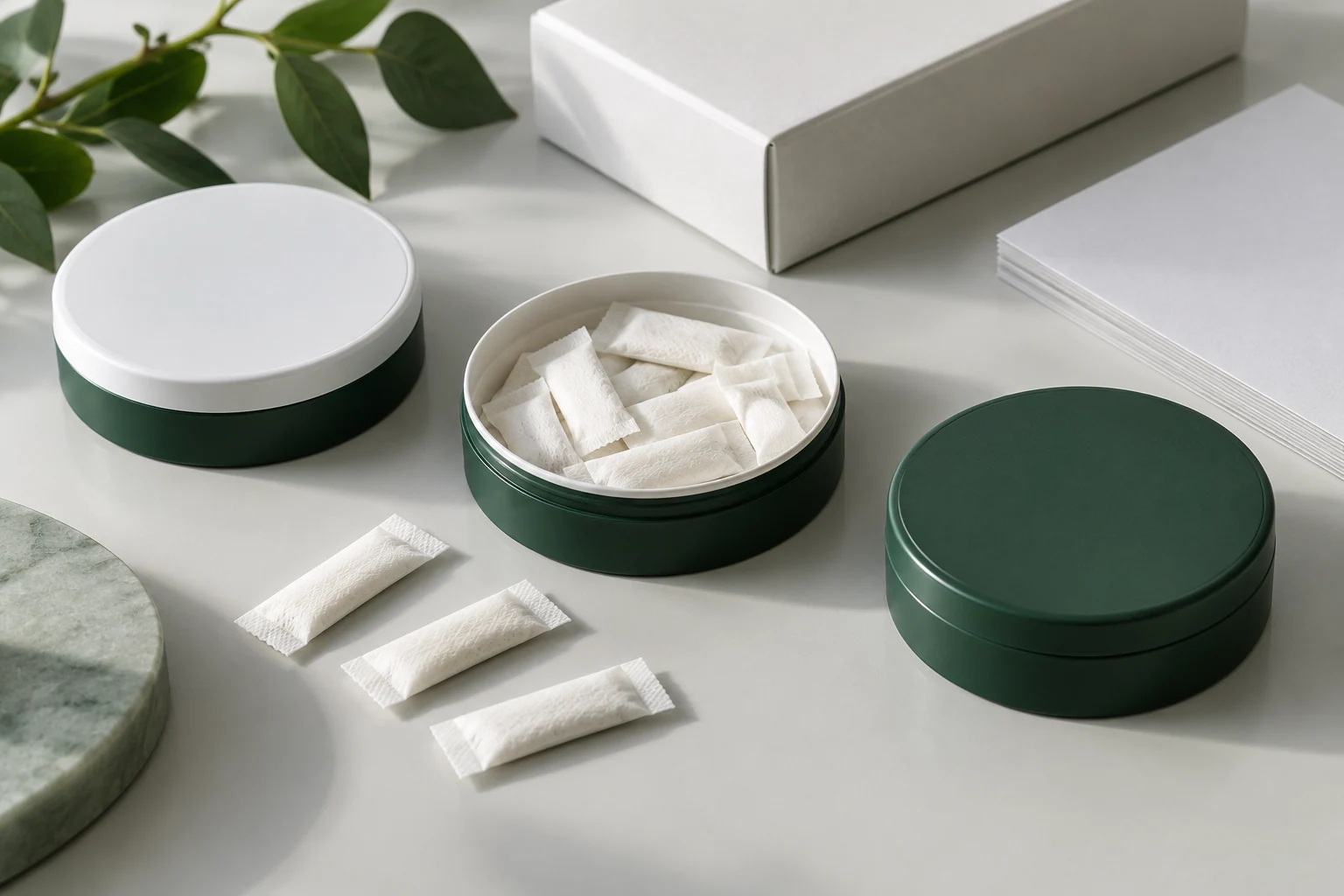
Start with a usable product brief
A sample request often starts with a flavor name and a photograph of a can. Those details help, but they leave the manufacturer guessing about the product itself. Before comparing private label nutritional pouch suppliers, write down the target country, intended user, ingredient direction and the claims you expect to place on the label. A supplier can then identify which parts are routine and which need development.
Separate requirements from preferences. A required ingredient form, allergen exclusion or can closure has a different commercial consequence from a preferred shade of green. Marking that difference prevents a sample team from optimizing the wrong feature. Keep the brief short enough that the buyer, formulator and artwork team can all use the same version.
Decide what the pouch is meant to deliver
“Nutritional pouch” describes a format rather than a finished formula. A vitamin blend, botanical powder and mineral concept can present different problems in taste, filling mass and storage. Ask the supplier to state the intended amount per pouch and the evidence behind any proposed claim. A list of fashionable ingredients is not a specification.
Confirm the use instructions at the same time. A conventional permeable pouch is removed after use; an oral dissolving film is designed differently. Describing one as the other changes consumer expectations and can complicate classification and testing. Settle the format before spending time on final packaging artwork.
Compare quotations on the same basis
One quotation may include analytical development, printed cans and cartons; another may price only filling into a standard pack. Put the scope into a comparison sheet. Record what is included, what is charged separately and which decisions can change the price. Do not assume that an attractive unit price includes development work or destination-market review.
- Define the ingredient specification and permitted substitutions.
- List pouch construction, fill target, can code, pack count and artwork version.
- State which tests, retained samples and release documents are included.
- Confirm sample charges, tooling, freight, taxes and agreed trade terms.
- Identify the approval that starts the quoted production schedule.
Avoid choosing a supplier on a promised delivery date alone. A date is useful only when its starting conditions are clear. Ingredient availability, sample approval, artwork and packaging procurement may have separate dependencies. Ask for those dependencies in writing.
Make the order arithmetic explicit
For this development service, the minimum is 3,000 cans per SKU and 9,000 cans per order. Three SKUs at 3,000 cans each meet both thresholds. Two SKUs at 4,500 cans each also meet them. Three SKUs at 2,000 cans each meet neither requirement, even though the order contains several flavors.
Ask how a SKU is defined before splitting the range. A change in formula, flavor, label or pack format can create a distinct production or inventory item. The quotation should explain how the supplier counts it. The minimum commercial order is separate from any sample or pilot work that has been agreed.
Approve a reference, not just a photograph
Keep an identified reference sample and the written specification that describes it. Record the flavor direction, cooling level, pouch feel, appearance and packaging. Where a feature needs measurement, agree the method and acceptable result. A photograph cannot establish fill consistency, seam integrity, ingredient identity or shelf life.
Before the commercial order, identify who approves the formula, artwork, packaging proof and release file. Also agree how changes will be handled. If a flavor carrier or can supplier changes, the effect on sensory quality and stability should be considered before the change reaches a batch. A clear approval record saves more time than a vague instruction to make the product “the same as the sample.”
Questions buyers ask
Can I launch three flavors at the minimum order?
Three SKUs at 3,000 cans each meet the 9,000-can order minimum. The supplier must still confirm how each SKU is defined and whether the formula and packaging are feasible.
Should I order packaging before sample approval?
Approve the technical and artwork requirements first. Early packaging commitments can create rework if the pouch size, pack count, claims or legal text changes.
References
Ingredient references inform the questions to investigate. They do not validate the performance or market status of a finished pouch.
Editorial approach: practical development guidance, primary references and a clear distinction between a concept and a validated finished product. About the project team.