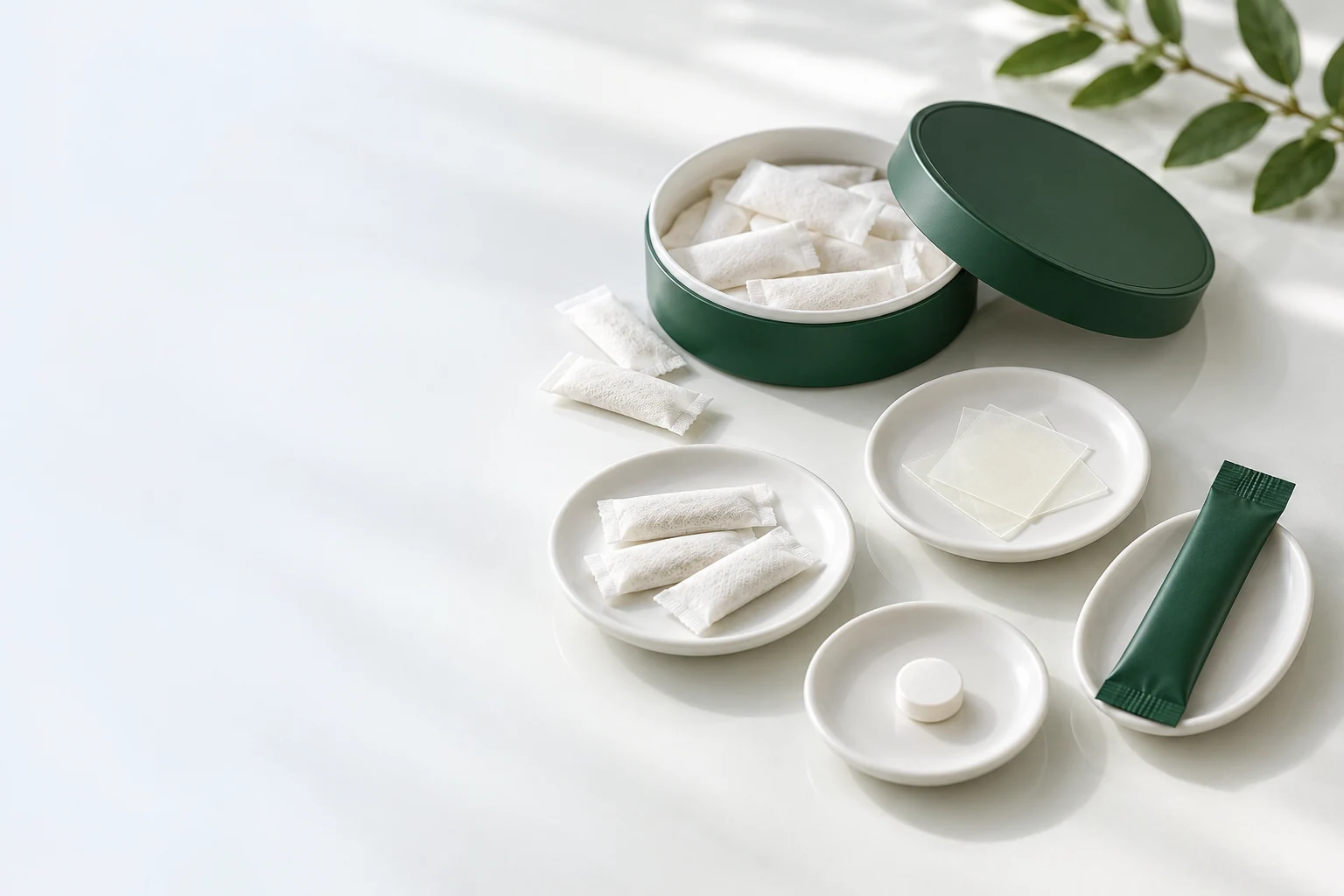
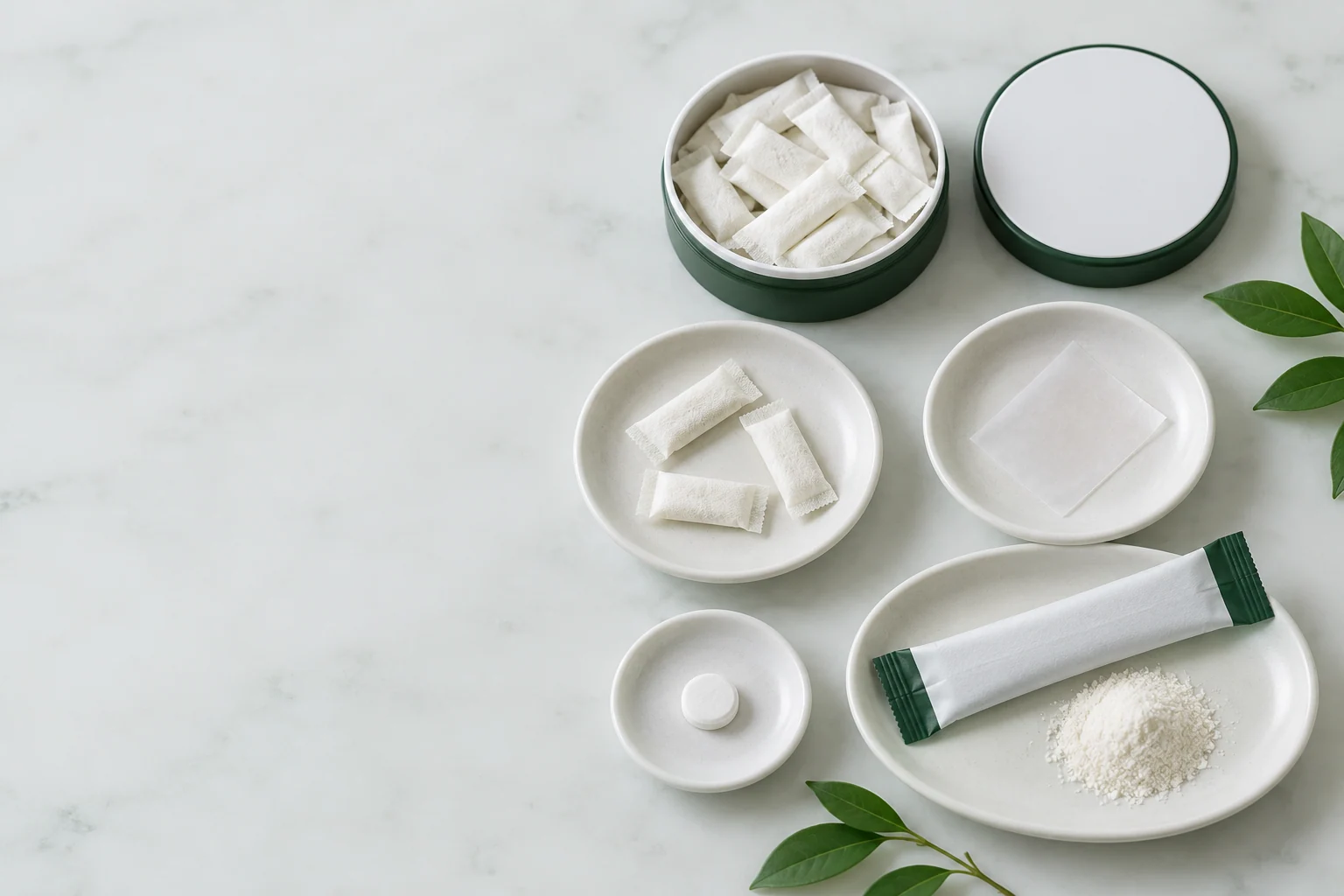
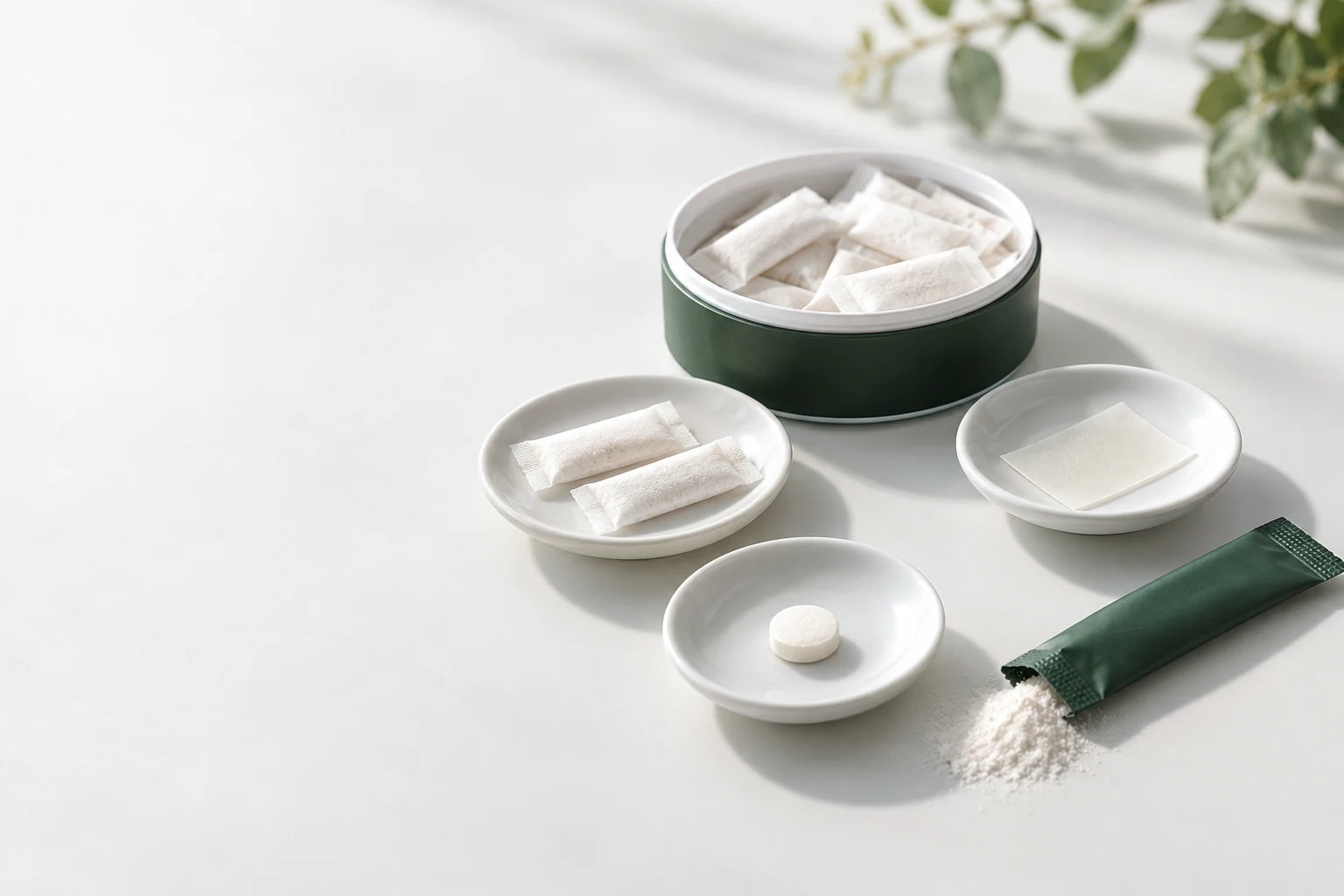
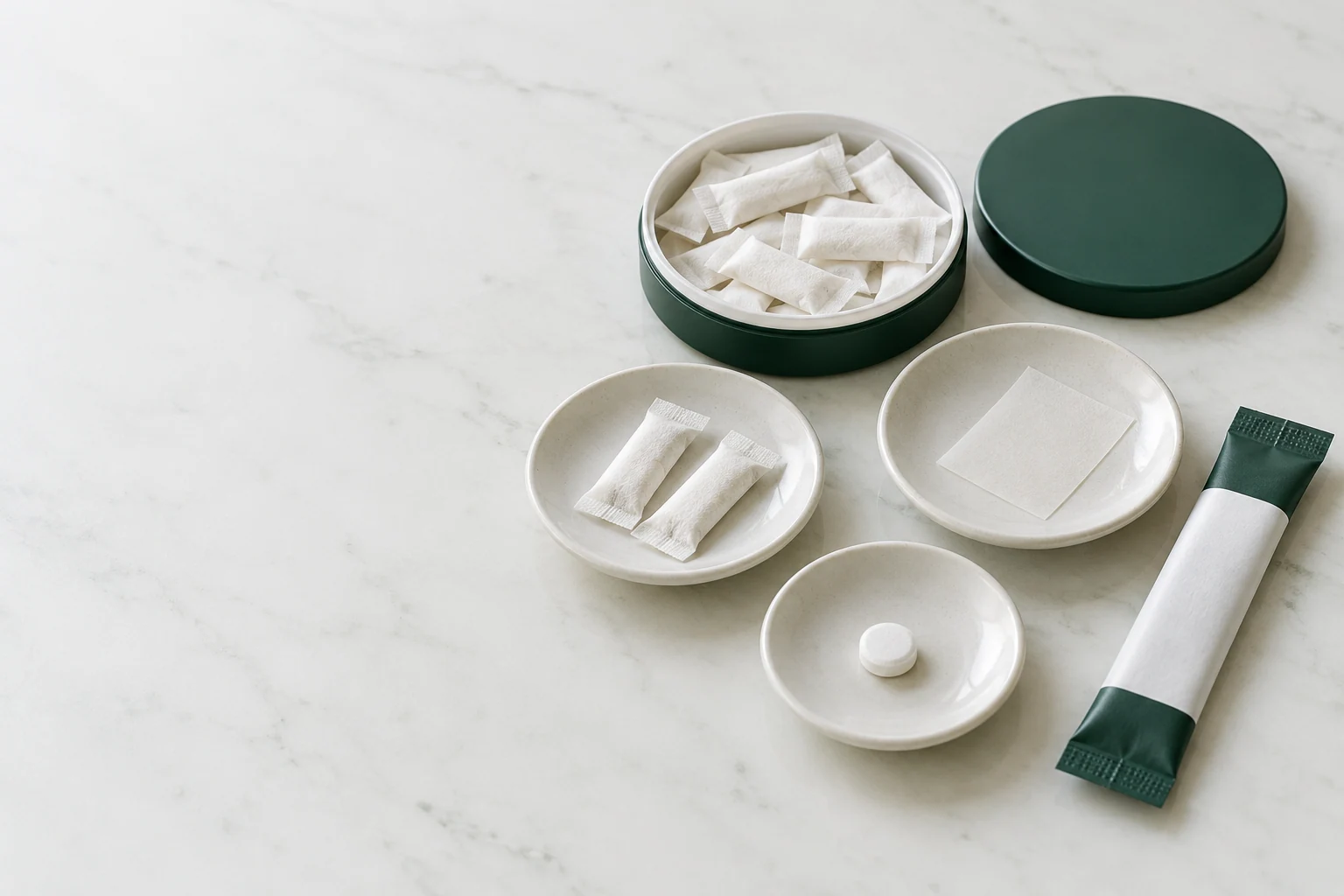
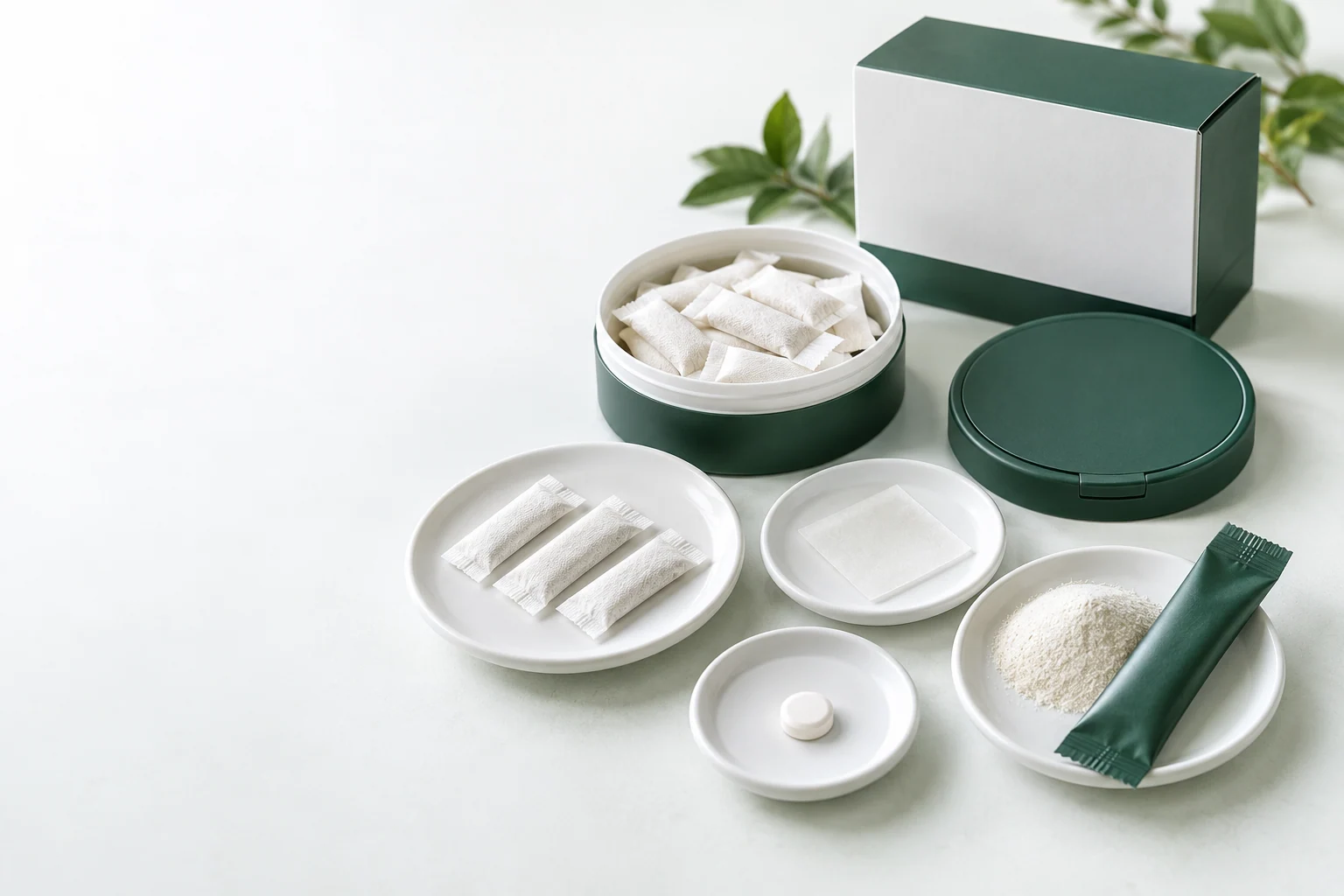
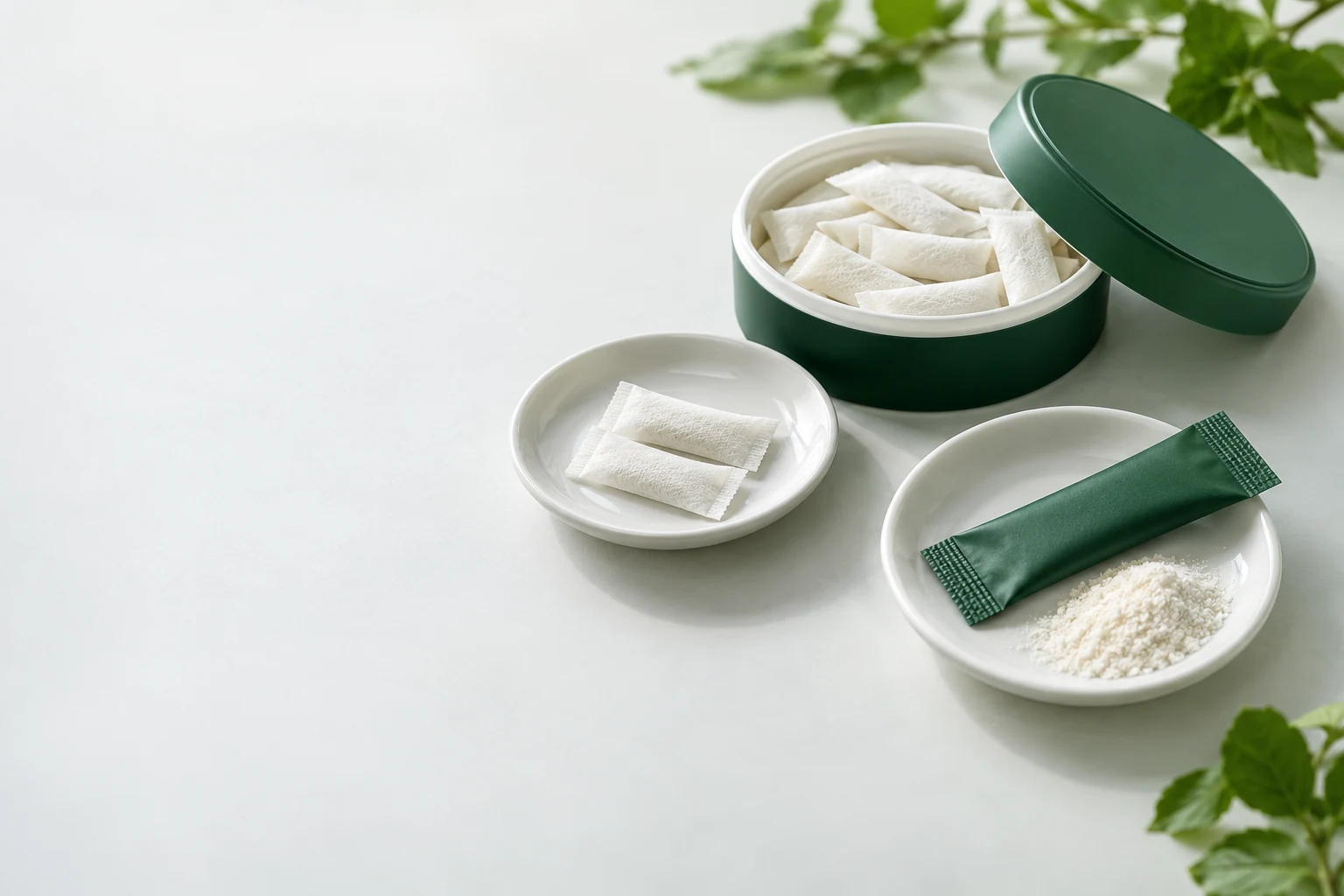
A conventional oral pouch contains a formulated filling inside a permeable outer material. It is placed in the mouth according to the finished-product instructions and removed after use. A pouch, an oral dissolving film and a drink-powder sachet are different formats; their materials and use instructions cannot be interchanged.
Compare development questions
Format
Practical advantage
Question to resolve
Oral pouch
A compact, individually portioned format.
Does the required ingredient load fit, and what release/use instructions are justified?
Tablet or capsule
A familiar format with a defined swallowable unit.
What disintegration, dissolution and ingredient stability evidence is required?
Gummy
A chewable sensory format.
How do heat, moisture, sugars and matrix affect the formula?
Drink powder
More room for ingredients that need gram-level quantities.
What mixing, flavor and serving preparation does the consumer need?
Oral dissolving film
A thin film designed to disperse in the mouth.
Can the film carry the intended load while keeping handling and stability acceptable?
Release is not absorption
A laboratory release result describes how an ingredient leaves a product under the test conditions. It does not by itself establish absorption, time to effect or a clinical outcome. Claims such as “fast acting,” “high bioavailability” or “sublingual delivery” require evidence for the actual ingredients and finished system.
“Sugar-free,” “zero calorie,” “plant-based” and “nicotine-free” also need the relevant composition, supply-chain and labeling support. They are specification goals to evaluate, not default badges for every concept.
Start with a testable brief
Build your project brief
Choose a starting point. Your selections carry through to the enquiry form.